Laetisaria fuciformis
Creeping red fescue; Perennial ryegrass ; Tall fescue
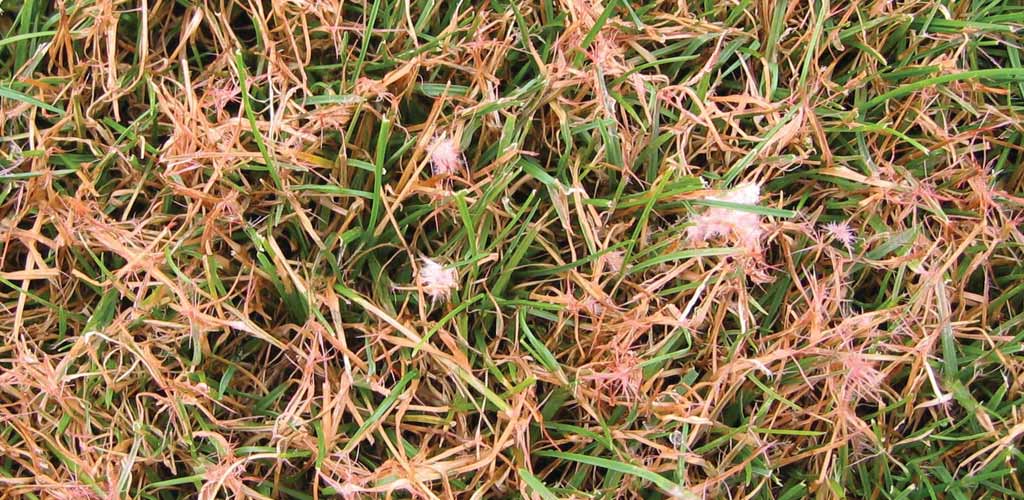
Red thread blights in distinct spots or circular patches, which appear pink or reddish-colored and range from 2" to 3' in diameter. When active in the presence of dew or even melting snow, a bright pink to red gelatinous fungal growth can be observed on leaves and sheaths. Resting bodies (i.e., sclerotia) called "red threads" are invariably present. Red threads initially are gelatinous, but soon become bright red, hard and brittle. Blighted leaves eventually turn tan, but on close inspection red threads can be seen embedded in dead tissues. White to pink "cotton candy-like" fungal flocks occasionally develop within blighted canopies.
Red thread can develop almost any time of the year including at snow melt and in summer, but is most common during extended, overcast and rainy weather in spring. While red thread is widely reported to be most severe in poorly nourished turf, it can severely blight professionally managed turf fertilized with more than adequate nitrogen. Red thread can cause severe thinning and promote weed invasion, but turf normally recovers with adequate nitrogen fertilization.
In all areas where susceptible cool-season grasses are grown.